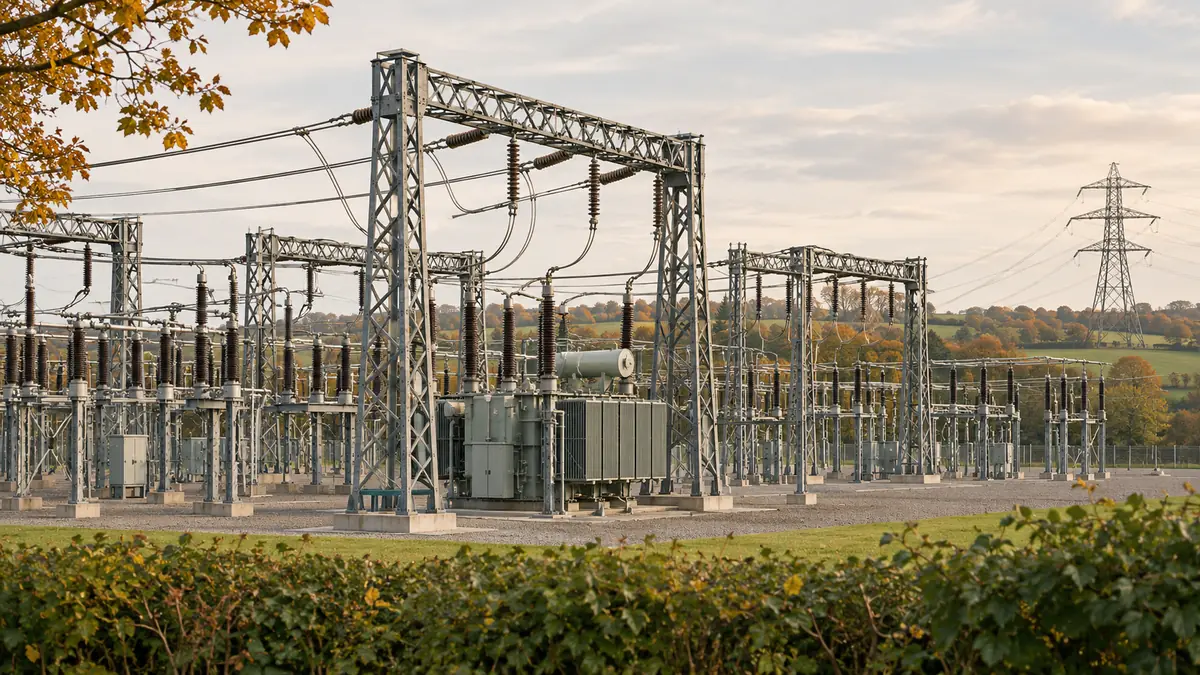
Households help pay for the wires, cables and pipes that deliver their energy. Those network costs form part of their gas and electricity bills, alongside the energy itself and other charges.
Britain is upgrading those networks. Ofgem, the energy regulator that sets rules for what network companies can recover from customers, expects higher network charges by 2031. It also expects savings elsewhere because electricity should be easier and cheaper to move to where it is needed.
National Grid's latest results show the scale of the work, but its global spending is not a household bill forecast. The company runs energy networks in Britain and the northeastern United States. It does not operate only in the British market.
Daylight Post found that its UK electricity transmission and distribution businesses accounted for £3.722 billion of £6.707 billion invested in the six months to September 30: just over half. We added those two business figures in its November 5 filing and compared their scope with Ofgem's household estimates.
What the network money pays for
Transmission is the movement of electricity over long distances through the main network. Distribution brings it through local networks to users. Building and maintaining that equipment takes money, which regulated charges help recover over time.
National Grid's filing also reports £48.6 billion of net debt, up £4.4 billion since March. That is a group finance figure. It includes a business working in different countries under different regulators, so it cannot simply be divided among British households.
How the £30 estimate works
Ofgem announced this five-year funding settlement in December 2025. It runs from April 2026 to March 2031. It covers several companies involved in electricity transmission and gas networks, rather than all of National Grid's businesses.
| Part of the estimate | Annual amount |
|---|---|
| Added network costs | £108 |
| Expected savings elsewhere compared with not expanding the grid | About £80 |
| Rounded combined increase | About £30 |
The amounts use 2025-26 prices, so they leave out later inflation. The savings are a forecast of costs avoided. The comparison asks what would happen with the upgrades against what would happen without expanding the grid. It is not a promise that today's total bill will be only £30 higher in 2031. Energy prices and other charges can also change.
Ofgem attaches delivery requirements to funding and says unused money can be recovered. Households depend on that oversight because they cannot choose a competing set of local wires and pipes.
Help with today's bill serves a different purpose
Our reporting on England's announced £100 energy payment explains which households can receive that support. A one-off payment can help with current finances, while network charges fund infrastructure used over a much longer period.
For customers, the relevant test is whether the extra network costs produce the capacity and savings promised. The amount a global company invests is only one part of that picture.