Starlink's plan for a US mobile phone network depends on more than satellites. An agreement announced on November 4 calls for tens of thousands of ground sites to be built over several years, with the rollout starting in 2027. No completion date is given.
Starlink is SpaceX's satellite communications business. Satellites can connect phones in places ordinary mobile networks do not reach. The new agreement also involves a large network of equipment on land, using technology supplied by Qualcomm.
Qualcomm makes technology used in communications networks. In this project, it is supplying equipment for ground-based 5G service. 5G is a generation of mobile network technology used to carry calls and data.
Daylight Post found that the planned network needs a major ground build as well as satellites. We compared Qualcomm's construction announcement with the terms of T-Mobile's existing T-Satellite service, which uses Starlink.
Getting a signal is the first step
T-Satellite lets compatible phones send texts and use selected apps outside ordinary mobile coverage. T-Mobile describes service in most outdoor areas where the user can see the sky. Its terms also warn of limited data speeds and possible gaps or interruptions.
That can make a real difference when an ordinary mobile signal is unavailable. But the terms do not promise that every app will work as it does on a normal mobile connection, or that a satellite signal will solve poor reception inside a home.
Two features matter here. Coverage describes where a phone can connect. Capacity describes how much information a network can carry. A connection that allows a text message is useful, but that alone does not establish how well it will handle people's wider daily phone use.
Why build on the ground too
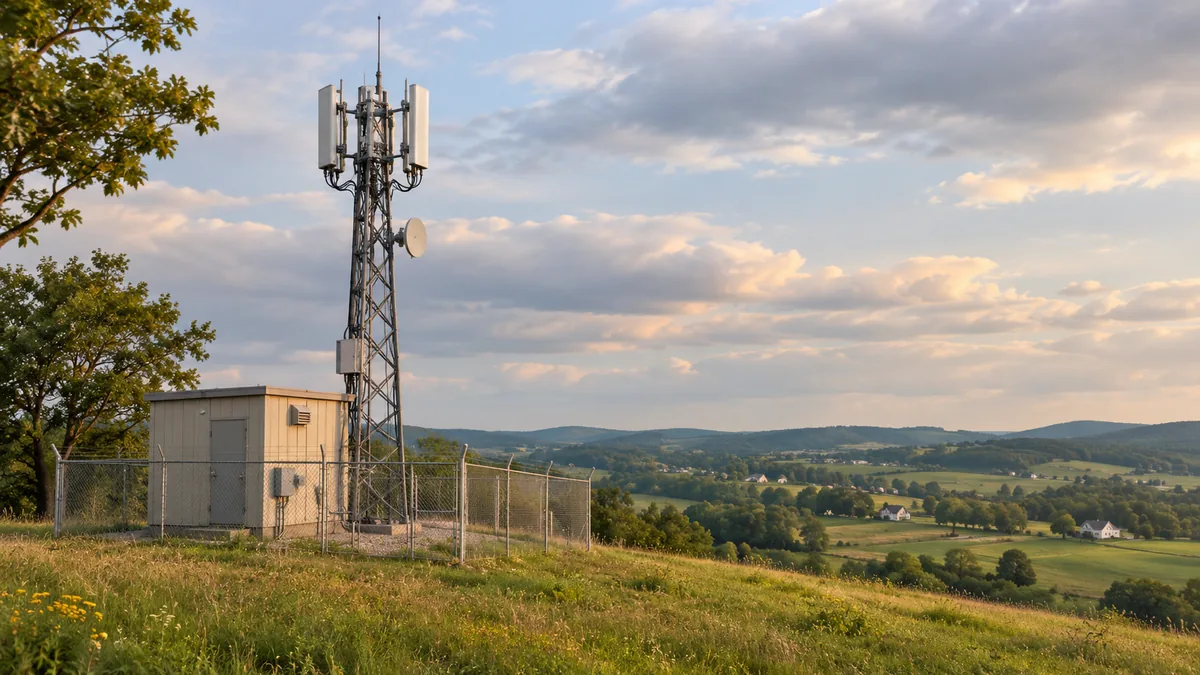
Ground sites contain local radio equipment that connects phones to the mobile network. They provide a path through equipment on land, alongside connections through satellites.
Qualcomm describes equipment designed to handle more traffic and use the available radio frequencies efficiently. Those frequencies are the parts of the airwaves used to send signals between phones and the network.
For a household with poor coverage, the useful questions are concrete: whether its phone can connect, whether that works where it needs service, and whether the connection can handle what it wants to do.
What customers still need to know
The existing satellite service's limits are not a performance test of the future network. They explain the gap between what is available today and what the planned build is intended to provide. Consumers still need actual availability, phone compatibility and service terms for their own location.