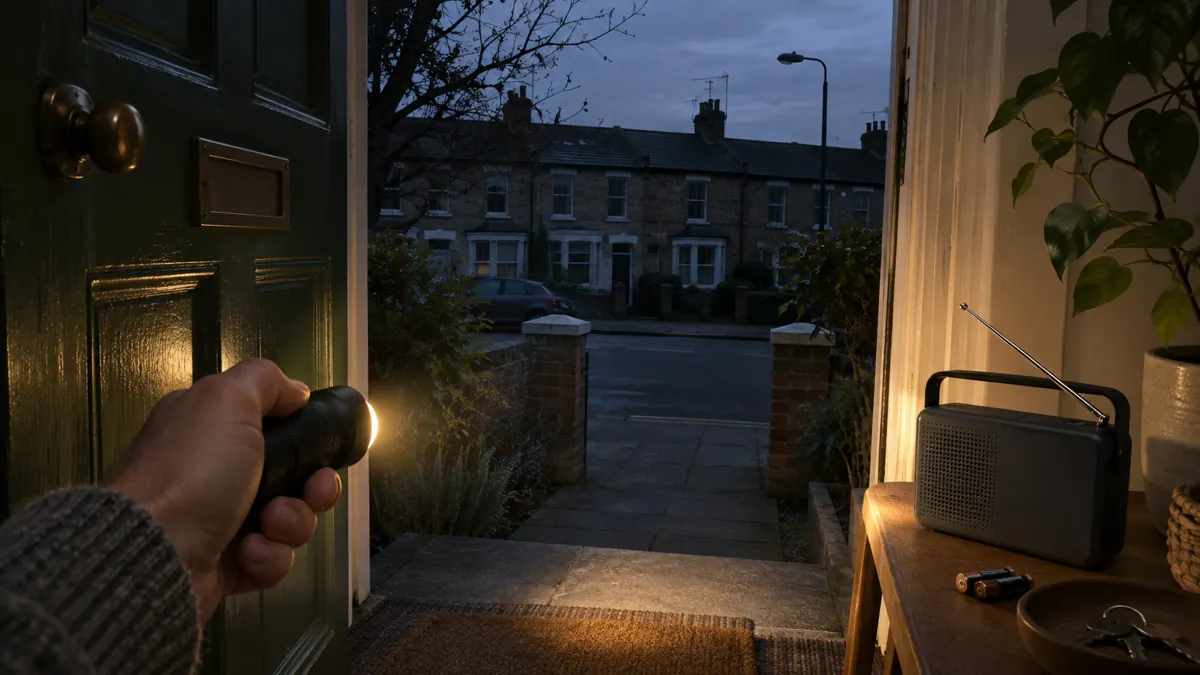
UK households are being asked to prepare for three days of disruption, while Great Britain's electricity restoration standard requires arrangements capable of restoring all demand within five days.
Daylight Post found the different timescales by comparing the government's new Be Ready campaign with the National Energy System Operator's restoration standard. A three-day household supply is therefore not a promise that power will be back everywhere by the time it runs out.
The distinction matters most for people who need electricity for medical equipment, have little room for supplies or cannot afford to buy extra food. Household preparation and public support have to work together while services are restored.
What the three clocks measure
The Cabinet Office launched the campaign on October 22. Its three-day advice concerns disruption to everyday services, which can include water, communications and the internet as well as power.
The electricity standard concerns the capability to recover from a major system failure. It applies to Great Britain, rather than Northern Ireland, and sets a regional interim target alongside the national one.
| Time | What it measures |
|---|---|
| Three days | Disruption UK households are encouraged to prepare for |
| 24 hours | Restoration capability for 60% of regional electricity demand in Great Britain |
| Five days | Restoration capability for 100% of Great Britain's electricity demand |
NESO must have the necessary capability and arrangements in place by December 31, 2026. The deadline is still ahead. The standard does not say every household would lose power for five days, or give an individual home a guaranteed reconnection time.
Support cannot depend on a full cupboard
The campaign explicitly asks people who can prepare to do so, freeing emergency services to prioritize those needing more help. The Cabinet Office says it worked with groups supporting people in insecure housing and foodbank users. Some recommended steps are free, with others intended to be low-cost.
One is joining an energy supplier's or network operator's Priority Services Register. Ofgem says it offers extra help including priority emergency support and, wherever possible, advance notice of planned power cuts. People using electrically powered medical equipment can qualify, alongside other eligible groups.
Advance warning of a planned cut and support during an emergency provide different kinds of protection. A registration scheme is not the same thing as a household having power throughout a major outage.
The three-day advice can help households prepare. The five-day restoration target shows why planning for people who cannot manage alone remains a responsibility for energy operators and emergency services throughout the recovery.