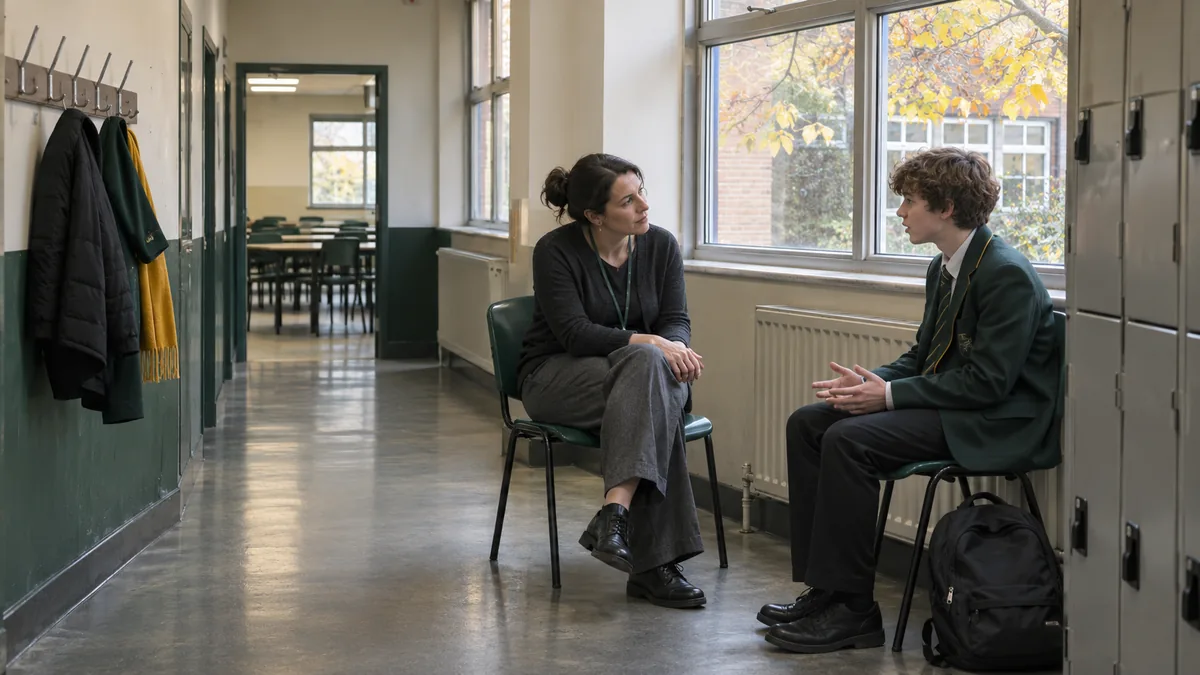
The Anti-Bullying Alliance, a group working to prevent bullying, released the preliminary findings on November 16.
Nottingham Trent University surveyed 812 teachers and other education staff across the UK. While 23% felt less than moderately equipped, 77% felt moderately or very equipped.
Daylight Post found that England’s school guidance already sets out responsibilities to prevent bullying, support children and train staff. The practical question is how to make those responsibilities work when a child turns to an adult for help.
What the survey can tell us
The survey asks how prepared staff feel, rather than observing their response to particular cases. The research is unpublished and has not yet been independently reviewed by other researchers. The release does not establish that the sample represents all UK school staff.
A confidence measure cannot show how much help a particular child received. It gives school leaders a reason to ask staff where they need support, rather than assume a written policy is enough.
Schools already have responsibilities after a report
The legal and school systems differ across the UK. The rules examined here apply to England.
The Department for Education’s bullying advice says every school must have measures to prevent bullying. Different legal rules apply to different school types, but prevention is a responsibility across the system.
Its advice also says schools should support children who are bullied in every case. That support depends on what the child needs: it might involve help from a member of staff who knows them well, a school support team, counseling or outside services.
Keeping a child in education matters too. The guidance warns that removing a bullied pupil from school can disrupt learning and leave the cause of the bullying untouched. A safe place for a break can help, but it needs to go alongside action to tackle what is happening.
This is why a report needs to lead to more than a reminder to be kind. The practical questions are who will help the child, what the school will do to stop the behavior and whether that help is making school safe enough to attend.
Staff need a clear route to help
England’s current school safeguarding guidance, Keeping Children Safe in Education, says staff should receive child-protection training when they start, with regular updates. Safeguarding means the work done to protect children from harm. The training includes online safety.
Each school should have a designated safeguarding lead: a member of staff responsible for coordinating that work and helping colleagues respond to concerns. Child-on-child abuse, including bullying, can happen online or away from school as well as on the premises.
When there is a safeguarding concern, staff should follow the school’s procedures and involve that lead or a deputy. The guidance says concerns, decisions and follow-up should be recorded. Serious risks may require children’s social care, the local authority service that helps protect children. That does not mean every bullying incident automatically leads to an outside referral.
The survey alone cannot tell us whether staff lacked training, lacked confidence despite training, or needed a different kind of support. It does make it reasonable to ask whether adults know the next step and who can help them take it.
Phone rules should not close the conversation
England is planning tighter restrictions on access to school phones. A rule about whether a device may be used does not, by itself, answer a report of abuse that reaches a child through it.
That fits a principle in England’s safeguarding guidance: children reporting abuse should be taken seriously and should not be made to feel they are causing a problem by speaking up.
For a family, these responsibilities translate into concrete questions: who is following up the report, what support is in place and how will the school check whether the child is safer? For a member of staff, knowing whom to ask for help is part of being able to act.
For children and parents, the response after a conversation matters as much as the invitation to start one. For staff, that response requires time, a clear process and support from the school around them.